


Difference between ham and ham shoulder, we explain it in detail!
Ham or Shoulder? They come from the same animal, but they are not the same thing even if they look similar at first glance. We all know what we want when asked "thigh or breast?" at a rotisserie chicken stand, but when it comes to ham, not everyone is clear on the differences between ham and shoulder. That is why at Enrique Tomás we want to help you understand which variety you are buying.
Ham or Shoulder?
When looking to buy ham or buy shoulder, we always ask ourselves the same question: which is better, ham or shoulder? First and foremost, keep in mind that neither is better than the other—they are simply different. We are all aware that the main difference between ham and shoulder is the price, but that is not the only distinguishing factor. Taste and the part of the pig they come from are other key aspects to highlight. Not to mention another very important one: slicing. Slicing a ham is not the same as slicing a shoulder. Although the tools and technique are identical, the process changes because they are two limbs with different anatomy, each requiring its own slicing approach. Let’s dive in!
If you want to buy a quality product and this question has been on your mind, there is no need to worry. At Enrique Tomás, as master ham experts, we break down the differences between ham and shoulder below so that you can choose exactly what suits you best.
What are the real differences between ham and shoulder?
The first thing to consider is the part of the animal each product comes from. Pigs have two front legs and two hind legs; shoulder (or paleta) refers to the front legs, while ham (or jamón) refers to the hind legs. By nature, the hind legs are larger and meatier than the front legs, which are leaner. Consequently, a ham yields more meat than a shoulder, where bone occupies a larger proportion of the piece.
From here, we will break down the physical traits, curing process, flavor profiles, and above all, slicing techniques.
Anatomy
The shoulder is closer to an arm, being the front leg near the snout, and ends in a shoulder blade. In contrast, the ham supports the meatier and more muscular hind part of the animal and ends in the hip bone. You can see this more clearly in the diagram below.
 Ham bone, hind leg
 Shoulder bone, front leg
Yield
When we talk about the yield of ham and shoulder, we mean the amount of meat that can actually be consumed from each piece. The yield of a shoulder is lower due to its size and shape. While it can also be sliced or cut into shavings and cubes, the shape of the bone and its narrower profile yield less meat overall. Ham, on the other hand, offers a higher yield, allowing you to enjoy almost all of it. That said, the animal’s breed and diet also influence the proportion of lean meat to fat, affecting final yield.

Buy Iberico Bellota Ham

50% Iberico Bellota Shoulder - Selection
Curing Time
Proximity to the bone accelerates the curing process. Because the shoulder has less meat and lies closer to the bone, it cures faster and spends less time in the cellar. Enrique Tomás Gran Reserva Shoulders are the most cured on the market, requiring 15 months to mature, whereas Gran Reserva Ham takes up to 18 months. 50% Iberico Cebo Shoulders take 18 months, compared to two years for 50% Iberico Cebo Ham. Meanwhile, an Iberico Bellota Shoulder cures for 24 months, while an Iberico Bellota Ham requires 36 months of curing.
This curing time directly impacts the final price. Since shoulders require less time aging in the cellar, their cost is lower than that of ham, which demands a longer curing period and extended care from the master artisan.
Flavor
Regarding flavor, keep in mind that because the meat on the shoulder is closer to the bone, its taste is more intense, making it ideal for palates accustomed to stronger, bolder cured flavors. However, if you prefer a smoother curing note, we recommend choosing ham.
Intended Use
Flavor is essential, but it shouldn’t be the only factor in your decision—consider how you plan to serve it and how many people are in your household. For one or two people, a shoulder is usually the best choice, as consuming a whole ham within the recommended three-week window (or even less during summer) can be challenging unless you entertain frequently. On the other hand, a larger family can easily finish a whole ham within that timeframe if consumed daily.
Whether you choose ham or shoulder, remember to slice a small portion every day—about 80 g for a shoulder and 150 g for a ham. This keeps the leg in optimal condition and prevents it from drying out.
For those who prefer enjoying cured ham occasionally—as most of us do—the best option is to buy pre-sliced packs, shavings, or cubes vacuum-sealed for convenience.

Perfect slice of ham
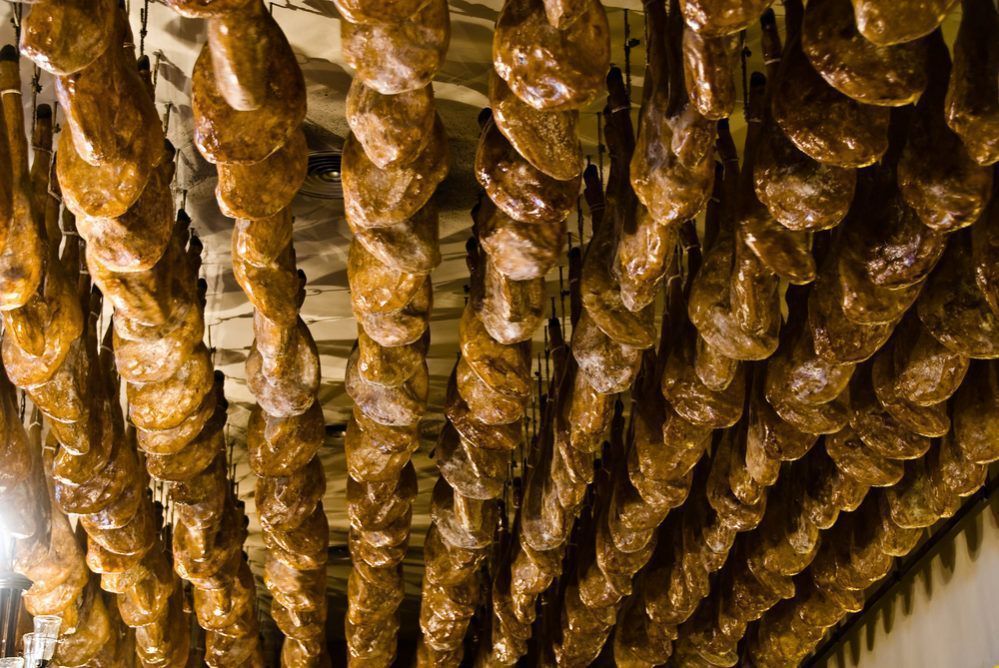
Ham curing process
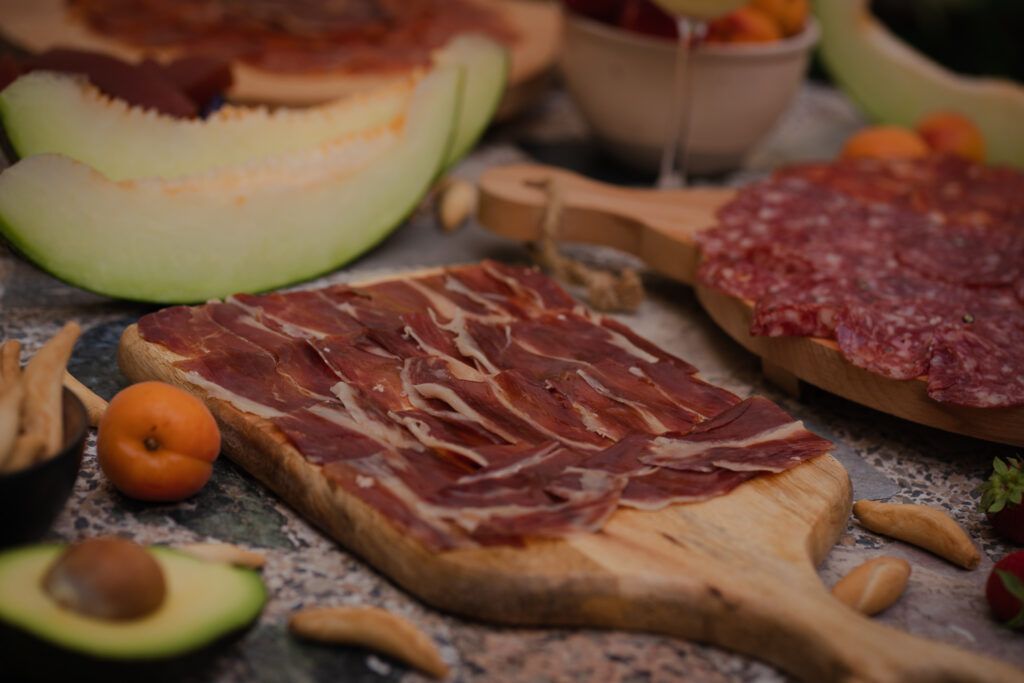
Iberico ham platter
Slicing
Ham is generally easier to slice than shoulder because it offers more meat and fewer bony contours. The most important key is maintaining good posture, keeping your non-slicing hand above the blade, and using a proper ham stand, a sharp ham slicing knife, and a boning knife. Keep slices small and thin—just right to fit comfortably on the palate and thin enough to release all subtle aromas.
Proper slicing is essential to fully enjoying cured ham. A average-quality ham tastes incredible when sliced well, while a premium ham can lose much of its character if sliced improperly—a real shame for a product crafted carefully over three years or more.
The best way to master slicing both shoulder and ham is by watching it done step by step. We have created helpful video tutorials on our YouTube channel to help you get started and build confidence.
Want to know how much professional slicing costs?
To find out how much it costs to have your ham or shoulder hand-sliced in our stores, click here.
Price
If you ask most people whether ham or shoulder is better, they will likely say ham, assuming higher cost means superior quality. However, that is a common misconception. Retail price is not determined by taste quality alone, but by the time required to cure the piece. Shoulders take fewer months to cure than hams, which keeps their production cost lower.
When it comes to taste, tasting a slice of shoulder alongside a slice of ham makes the difference clear: the shoulder delivers a bolder, more intense flavor, while the ham offers a smoother, milder profile.
Ultimately, ham is not better than shoulder, nor is shoulder better than ham—they are distinct products crafted with equal dedication. Whether you choose to buy ham or select a shoulder, at Enrique Tomás we guarantee one thing: you will love every bite, as both are truly delicious!
- • More tips to learn more: Does good ham always have to be expensive?
Have more questions? Explore our full collection and find your favorite at Enrique Tomás.