What's the difference between chorizo and chistorra?
Chorizo and chistorra are two of the tastiest sausages in our country, and everyone enjoys them with a bit of bread! But do you know what the difference is between chorizo and chistorra? Since both are red, it's easy to confuse them, but they are actually completely different products.
If you want more information about this, you're in luck!
At Enrique Tomás, we'll tell you everything you need to know!
How Are Chistorra and Chorizo Different?
Both chistorra and chorizo are red sausages made from pork meat. Both are very typical in Spanish cuisine and are commonly enjoyed as tapas.
But beyond this, what makes them different? Let's take a closer look:
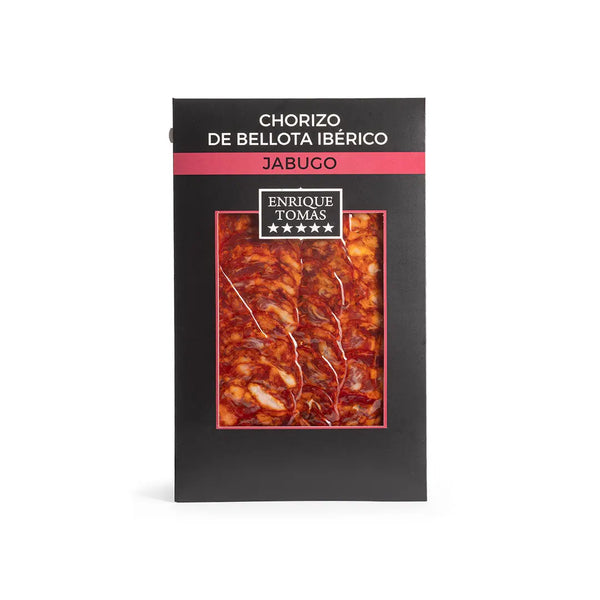
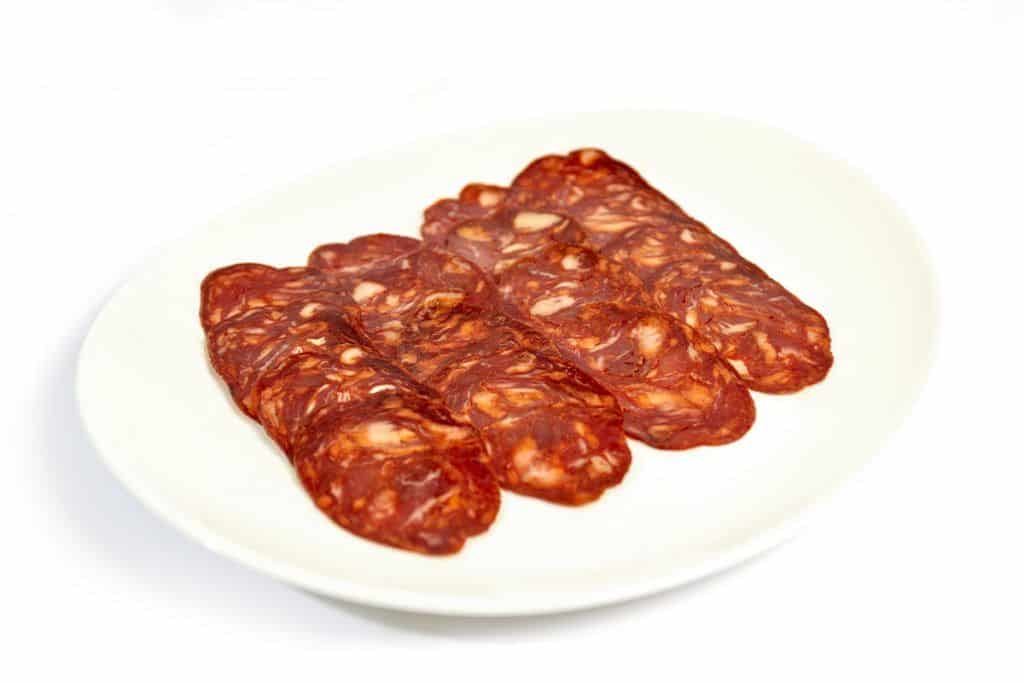 Buy Iberian chorizo from Enrique Tomás
Their Thickness
Although it's easy to confuse them at first glance because they are the same color, you just need to look at their appearance. Chistorra is a thinner and longer sausage than chorizo, which is usually thicker and about 30 cm long.
Their Ingredients
As we mentioned earlier, both sausages are made from pork meat. However, they also require spices for their preparation. Chistorra only requires garlic and paprika, while chorizo requires these ingredients and additional spices.
Their Preparation
Chistorra is a semi-cured sausage, while chorizo is cured. This means one takes longer than the other to be ready.
Related to the above, the way to serve them is different: since chistorra is not fully cured, it needs to be cooked. It's most common to fry or grill it and serve it with some bread; some people also like to add aioli. Chorizo can be served raw, fried, or grilled, and it's delicious in any form!
Although both are Spanish, they come from different regions of the country: chistorra is typical of Navarre and the Basque Country, while chorizo, depending on where it's made, varies in appearance. There are many types of Spanish chorizo, and depending on which one you try, you'll notice stronger or milder flavors.
For example, Navarre chorizo is mild but intense, and Canary Island chorizo, known as chorizo de Teror, is perfect for spreading. Some are better suited for different stews, such as lentils with chorizo, while others are ideal for eating raw or with broken eggs and potatoes. Therefore, depending on the type of dish you want to prepare today, you'll need to buy one or the other.
Nutritional Differences Between Chorizo and Chistorra
Although the differences in this regard are not very noticeable, they should also be considered. First, it's important not to consume either of them in large quantities; quality over quantity. Regarding their nutritional value, chistorra contains more iron and vitamins A, B3, and B12. Now that you know the difference between chorizo and chistorra, what are you waiting for to try both?
You're going to love them!