

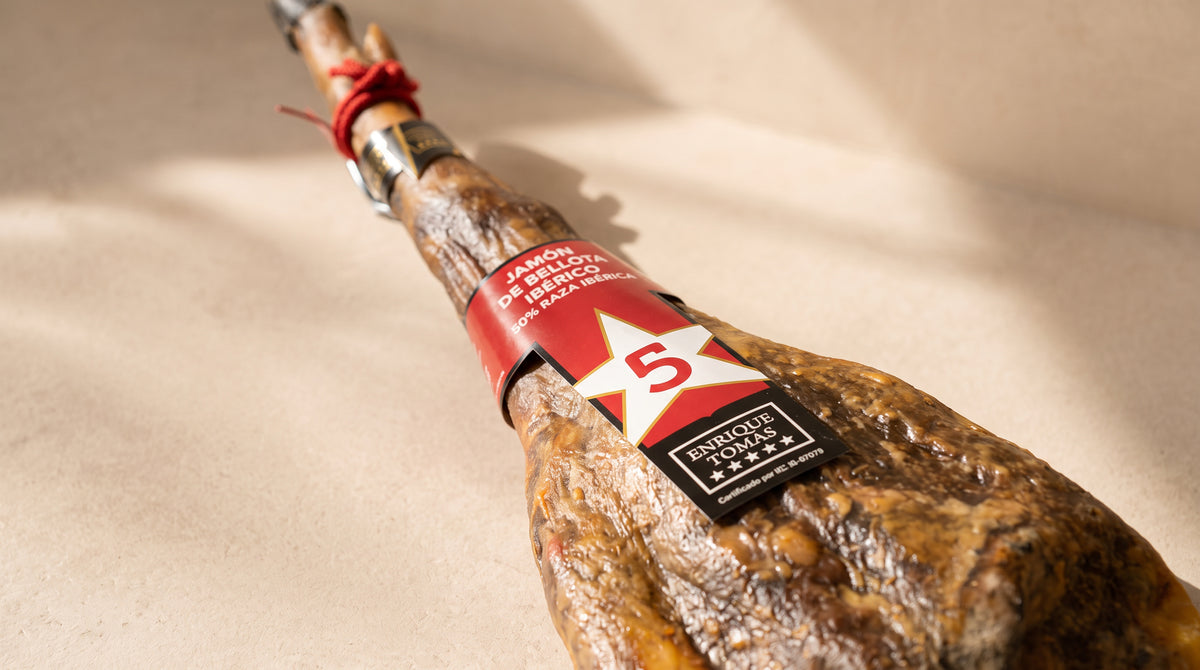
ACORN-FED 50% IBERIAN HAM (RED LABEL)
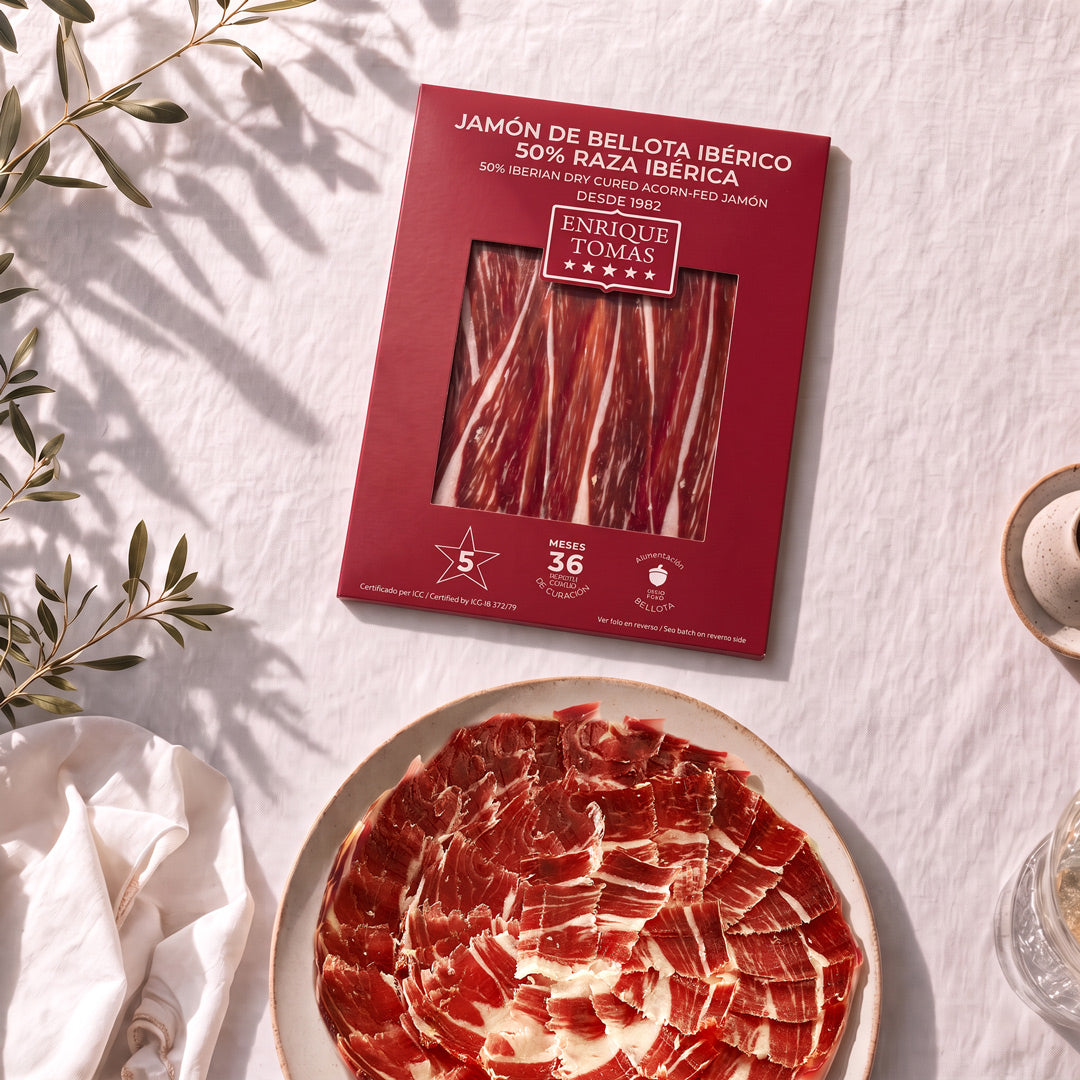
50% Iberian Acorn-fed Ham, identified by its red label (or red band), is the smart choice for its value for money. It comes from pigs raised in freedom in the pasture during the montanera season, fed on acorns. Its genetic crossbreeding (100% Iberian mother and Duroc father) gives it spectacular fat marbling, achieving a juiciness and intense flavor that you will love. A gastronomic delight with more than 36 months of curing.
Sorry, there are no products in this collection
FAQs about Acorn-fed 50% Iberian Ham
What does it mean for a ham to have the Red Label or Red Bridle?
What is the difference between Pata Negra (Black Label) and Red Label?
The main difference is the breed purity. Pata Negra is 100% Iberian, whereas Red Label is 50% Iberian. In terms of flavour, the 100% is more complex and oily, while the 50% (Red Label) tends to be juicier and displays more visible marbling thanks to the Duroc crossbreeding, offering an intense yet friendlier flavour for all palates.
Why does Acorn-fed 50% Ham have so much marbled fat?
The shine and spectacular marbling of the Acorn-fed 50% Ham are due to the genetics of the Duroc Jersey breed (father). This breed provides a greater capacity for intramuscular fat infiltration compared to the pure 100% Iberian pig. This results in a texture that melts in the mouth and exceptional succulence, while maintaining the nutty aroma derived from its acorn-based diet in the wild.
How long is the curing time for an Acorn-fed 50% Iberian Ham?
At Enrique Tomás, our Red Label hams undergo a minimum curing period of 36 months. Just like the Pata Negra, these hams require a prolonged time in the bodega (cellar) to develop their aromatic nuances, ensuring that every slice is a high-level gastronomic experience.
Characteristics of Red Label Ham (50% Iberian Breed)
Did you know that Iberian ham comes from the hind leg of the authentic Iberian pig from the Iberian Peninsula? Let's start from the beginning, delving a bit more into this ham based on three variables that allow us to differentiate it perfectly: the breed, the diet, and the origin.
The 50% Breed: Iberian and Duroc Crossbreed
The Iberian pig is a unique species with characteristics that set it apart from other animals of the same species, such as the ability to infiltrate fat into the muscle. Physically speaking, these animals have a well-proportioned head and a pointed snout. Unlike other types of pigs, the Iberian pig has a powerful neck, a drooping dewlap, medium-sized ears shaped like a visor, and a broad belly. Its limbs, which are of particular interest when it comes to ham, are slender.
The Curing Process of Iberian Ham
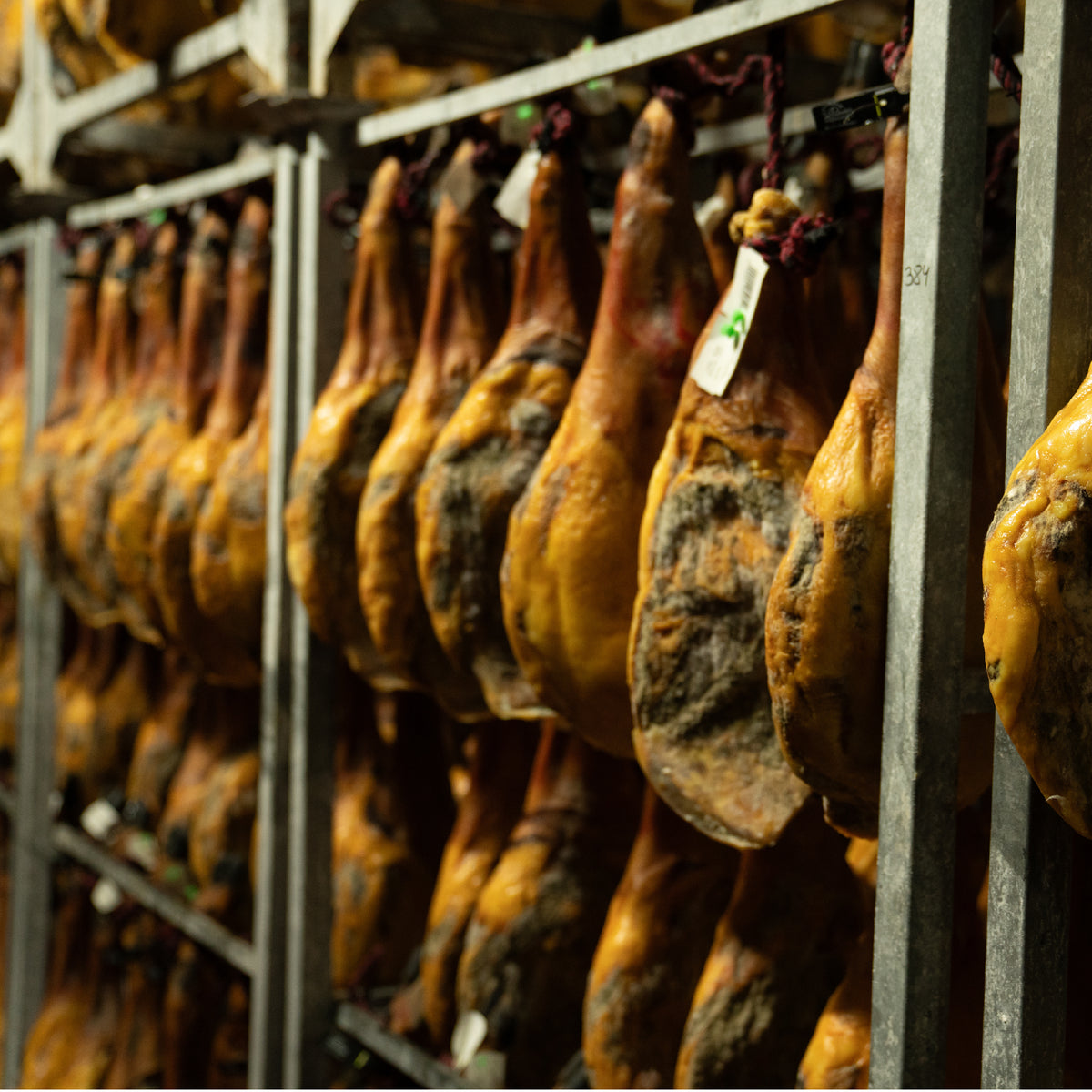
Another one of the most important variables to consider in distinguishing Iberian ham, especially 100% Iberian ham, from the rest, is what we call at Enrique Tomas: "the curing process." This curing process involves nothing more and nothing less than the conditions in which the leg is preserved, the amount of salt used, the storage temperature, and the curing time. In essence, ham is cured with time, expertise, care, and salt.
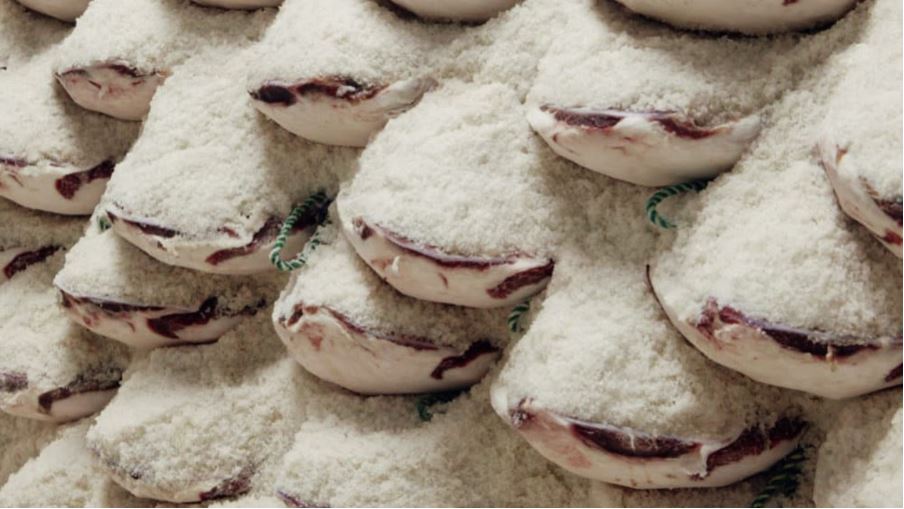
In the case of Iberian ham, from the moment the animal is born until the entire process is completed and we purchase it, it can take up to five years. For its curing, the ham needs to be salted and left to cure at an exact temperature. This curing process lasts between thirty-six to forty-eight months, depending on the weight of each piece.
Differences between Red Label and other qualities
The types of Iberian ham are obviously determined by the breed, which is always Iberian, the place or places where it has been raised, and most importantly, the type of diet it has followed in adulthood.
Iberian pig raised exclusively on a farm
An Iberian pig raised exclusively on a farm has been fed with food and cereals, even in adulthood. These are usually pigs with a 50% Iberian breed. That is, a mother that is 100% Iberian and a father of a non-Iberian breed. The result is an Iberian cebo ham.
Iberian pig raised on a farm and in the countryside
This Iberian pig typically has a percentage of Iberian breed of 50% or 75% and has been raised partly on a farm where it was fed with food and partly in the countryside where it could graze freely and eat wild fruits and herbs. The result is an Iberian cebo de campo ham.
Iberian pig that has undergone the Montanera period
These Iberian pigs, like the others, have been raised on a farm and have been fed with food, but when they reach adulthood, due to their quality and the percentage of Iberian breed, the farmer decides that they should undergo the Montanera period.
The Montanera is a 4-month period that goes from autumn to winter, during which Iberian pigs graze freely in the Spanish dehesa, an area where the oak trees are ready to provide the best fruits that the Iberian pig needs to produce the most coveted Iberian ham in the world, the Jamón de Bellota.
These pigs do not only eat acorns and everything natural they find, but they also drink water from the rivers, which makes them exercise a lot, contributing to good musculature in their limbs. All of this contributes to the production of the best ham in the world, the 100% Iberian Jamón de Bellota, also popularly known as Pata Negra, meaning ham that comes from 100% Iberian parents. However, there can also be 50% Iberian Jamón de Bellota, where the mother must also be 100% Iberian, but the father is not of Iberian breed.
Jamón de Bellota 100% Iberian, 5 Estrellas Premium, Enrique Tomás
Jamón de Bellota 50% Iberian, 5 Estrellas, Enrique Tomás