


5 Differences Between Lacón and Ham
One of the most common questions in the world of jamón, especially among food lovers, gourmets, and fans of pork products, is: are lacón and jamón the same thing? At Enrique Tomás, we're here to clear up any confusion. Discover all the differences between lacón and jamón and keep reading!
What is lacón?
Lacón is a pork product made from white pig breeds and protected by a Protected Designation of Origin (PDO) from Galicia, and also produced in Asturias. It is made using white pig breeds such as Large White, Celta, Landrace, and Duroc.
Among the different varieties, you'll find traditional Galician lacón, as well as another version that is unfortunately becoming less common: lacón truffado. This variety differs from the traditional recipe because chopped truffles, brandy, and other spices are added during production.
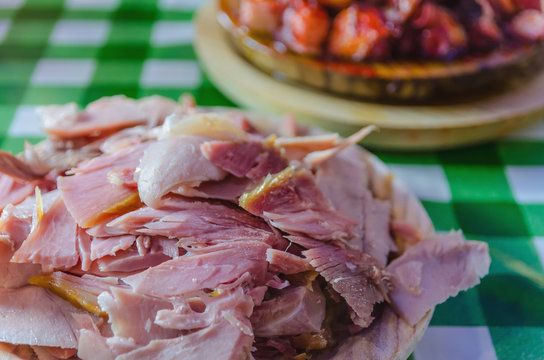
Traditionally, roasted lacón is served with Galician potatoes and turnip greens (grelos). It is a true delicacy. But let's get to the question everyone asks: how is it different from jamón? We're about to reveal all the secrets behind these two pork specialities so that you won't have any doubts left!
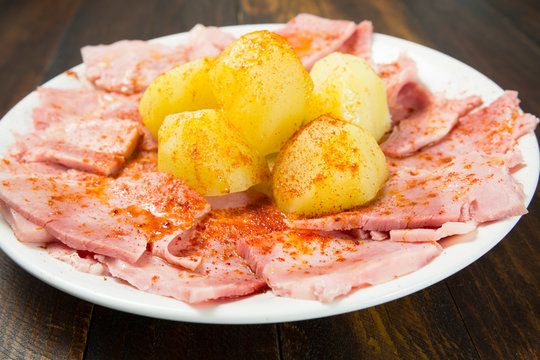
Roasted lacón with Galician potatoes and turnip greens (grelos)
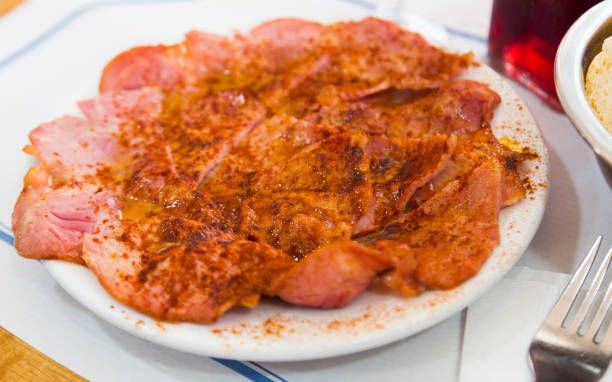
Main differences between jamón and lacón
Although only a few letters separate the words jamón and lacón, these two products differ greatly in quality, production methods, and characteristics. Let's begin with something important: jamón ibérico is completely different from lacón. As its name suggests, jamón ibérico comes from the Iberian pig, while lacón is produced from white pig breeds.
On the other hand, jamón serrano shares more similarities with lacón, since both products come from white pigs. That said, lacón and cured jamón have very little else in common. At Enrique Tomás, as specialists in jamones ibericos, jamón ibérico, and other cured pork products, we can assure you that the differences are considerable: the cut, curing process, origin, price, and even how they are eaten. Let's look at each one in more detail.
| Jamón | Lacón | |
|---|---|---|
| The cut | Jamón comes from the pig's hind leg. Slices of cured jamón show distinctive texture, and the fat is distributed specifically. | Lacón comes from the front leg, just like a shoulder cut. More specifically, lacón is produced from the section that runs from the knuckle down to the hoof. This cut is also known as the fore shank. Slices of lacón are juicy and the appearance is unique. |
| The curing process | The curing period for jamón serrano generally ranges from 12 to 24 months, whereas for jamón de bellota, curing can take anywhere from 24 to 38 months, placing it in an entirely different category. | Both require salting and curing, but its curing period is considerably shorter. Lacón only requires around 15 days of curing. Altogether, the full production process takes approximately 35 days. |
| Origin | PDO jamón serrano is produced in Trevélez (Granada) or Teruel. Iberian pigs are native exclusively to Spain and Portugal. | Lacón comes from Galicia (PDO Lacón Gallego). White pig breeds originate from various countries: Duroc from the US, Large White from the UK, and Pietrain from Belgium, raised without geographical restrictions. |
| Price | The production of jamón requires significantly more time. On average, a very good jamón may cost around €30 per kilogram, an excellent jamón around €60 per kilogram, and an exceptional jamón may exceed €120 per kilogram. | Significantly more affordable. A quality 3 kg lacón typically costs around €20, with an average price of approximately €6 per kilogram. |
| Consumption | Consumption of jamón and shoulder cuts is considerably higher. Buying jamón ibérico, iberian ham, or a shoulder cut has become increasingly popular in countries like France, Germany, Belgium, the Netherlands, Sweden, Mexico, and Chile. | Mostly consumed within Spain, deeply linked to Galician tradition. |
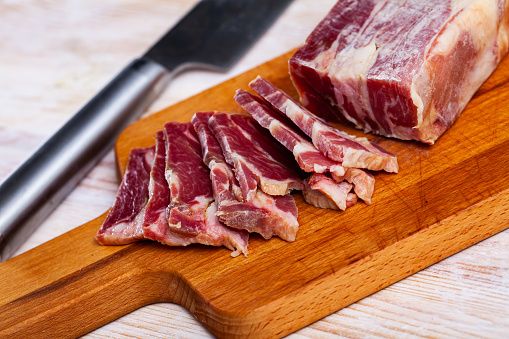
Cured Lacón
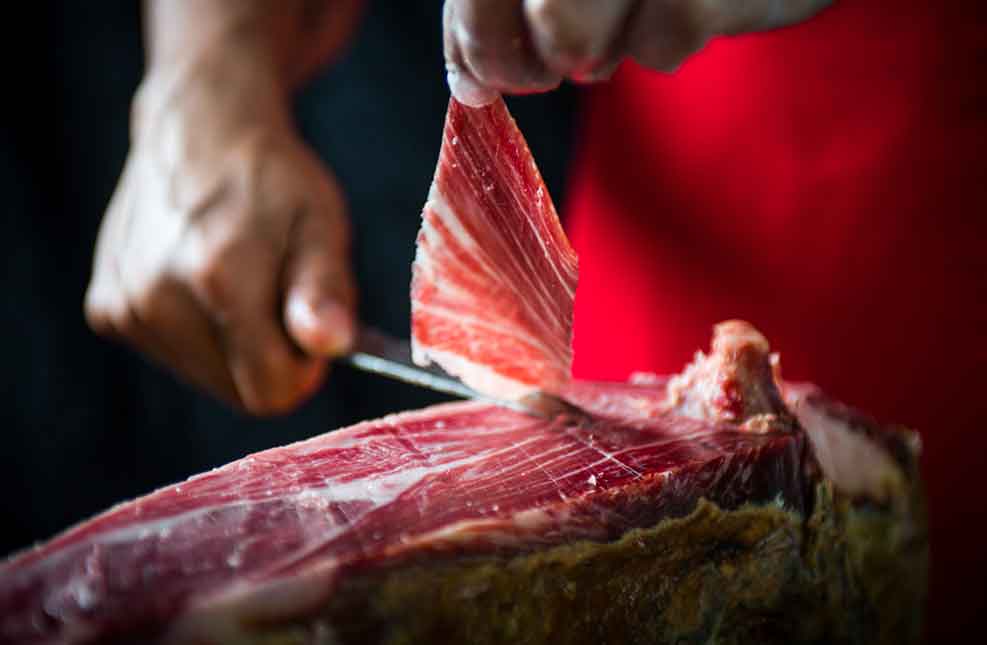
Cured Jamón
If you're interested in this topic, don't miss the differences between jamón serrano and jamón ibérico. Despite seeming similar, there are many distinctions between them. Take a look at the prices of our whole jamón serrano and jamón ibérico pieces, as well as our sliced jamón packs from Enrique Tomás. We know that jamón crosses borders. That's why we've spent years opening stores not only in Spain, but also in Argentina, the United States, France, England, Mexico, Peru, and Puerto Rico. Demand is high in all these countries, and people truly appreciate a quality product.

Lima Shop, Peru

T4 Shop, Madrid

Alicante Shop
What about lacón and cooked jamón?
Now that we've covered the differences between lacón and jamón, there's one final comparison to make: what about cooked jamón? Some people may be confused by the similar colour of these products, but in reality they have very little in common. Let's start with what they do share: both are made from white pig breeds.
Lacón
Comes only from the front leg. Goes through the specific salting process that lacón undergoes. During the drying stage, lacón is not heat-treated.
Cooked jamón (often known as York ham)
Can come from either the hind legs or the front legs of the pig. It does not go through a salting process. During the drying stage, cooked jamón is heat-treated.
Discover all the differences between lacón and jamón