


Surely, when you have wanted to buy jamón or enjoy it in a sandwich, you have often heard in a delicatessen shop, bar or market: “This is jamón de cebo ibérico.” But what exactly is jamón de cebo? It is jamón obtained from Iberian pigs from the Iberian Peninsula that are fed on a diet based on feed. At Enrique Tomás, we are experts in all things Iberian, so we are going to explain in detail what makes this type of jamón special and why it is called de cebo. You might be surprised!
The first thing to bear in mind is that jamón ibérico is only obtained from the hind legs of Iberian pigs from the Iberian Peninsula that have the ability to infiltrate fat into the muscle, a genetic characteristic that no other animal in the world possesses.
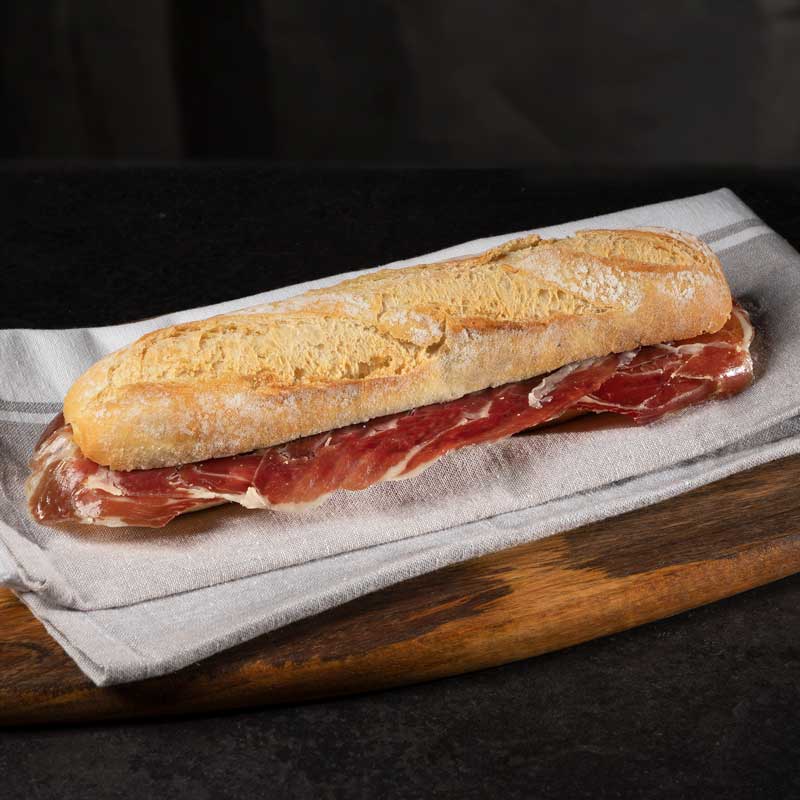
Bocadillo Paleta ibérica de cebo 4 estrellas Enrique Tomás
The three types of jamón ibérico according to diet
The jamón obtained from these pigs can be classified into three types according to their diet:
Obtained from Iberian pigs fed on acorns and natural products in the dehesa. The exercise in the countryside and acorn-based diet result in a very rich and flavoursome jamón with plenty of aromas.
Produced from pigs fed on natural pastures, grasses and feed, previously known as recebo. They have NOT been fed on acorns, unless the harvest was particularly abundant.
Cebo ibérico
Produced from pigs "fattened" on feed in adulthood, hence the name de cebo. They have not been fed on acorns or taken part in the montanera.
What determines the type of jamón produced by an Iberian pig?
The diet followed by the pigs affects the price of their meat, as raising them in the countryside, where they need to be transported, does not cost the same as raising them on farms. Ibérico de bellota is therefore more expensive than cebo, but this does not mean that it is better. It simply means that it is juicier and has required greater production costs. Ultimately, it is up to each diner to decide which one they prefer.
Alongside this factor, there are three other elements that determine the price of the meat:
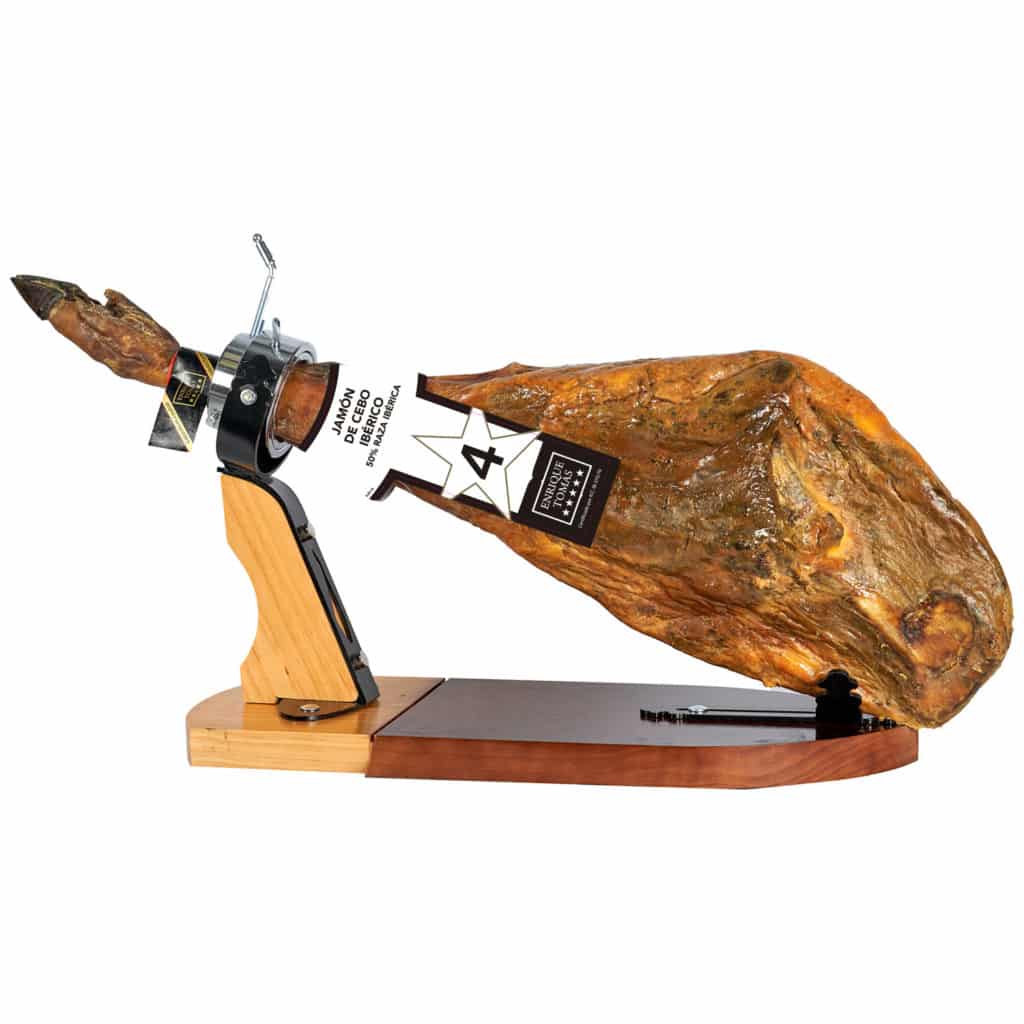
Jamón Ibérico de cebo 4 estrellas Enrique Tomás
1
The degree of mechanisation involved in the curing process. Higher craftsmanship leads to higher production costs and higher perceived quality.
2
The length of time it is aged in the cellar. More aging months mean higher costs, but also more nuances and aromas in every slice.
3
The reputation of the brand that sells it. The producer's reputation and quality controls directly influence the final price.
Supply of jamón ibérico de bellota is limited
2,8M
pieces of jamón ibérico de bellota are produced each year in Spain: half are jamones and the other halfpaletillas. Can supply be increased? No, because activity in the dehesa is controlled, as is the number of trees. The quantity of acorns available determines the number of pigs that can be fed. Jamón de cebo, however, has no such limit.
Could you now explain what jamón de cebo is? That is precisely our aim: to share the culture of jamón and help you learn more about this exquisite delicacy.
Finally, now that you know all the theory, there is nothing better than putting it into practice. So why not try the best jamón ibérico with one of our products?