


Eating tapas has become a symbol of Spanish gastronomic culture. Over the years, this way of sharing and trying different dishes during a meal has won over tourists travelling to the Iberian Peninsula to enjoy the warm climate, lively atmosphere and, of course, excellent gastronomy through Spanish tapas.
The origins of Spanish tapas and “tapeo”
This gastronomic tradition dates back a long way. In fact, even in the famous book Don Quixote by Cervantes, tapas were referred to as “llamativos”, while Quevedo called them “avisos” or “avisillos” in his poems.
It is believed that the concept of the “tapa” originated with King Alfonso X “El Sabio”, who ordered that wine should not be served in Castilian inns unless it was accompanied by something to eat. This was intended to prevent the alcohol in the wine from affecting guests too much.
At the time, a tapa could be a slice of jamón or another cured product such as cured meats. This gastronomic custom of accompanying a drink with something to eat has survived to this day and, in the same way, we can say that jamón remains one of the star ingredients in Spanish tapas .
The Real Academia Española defines a “tapa” as any portion or solid food capable of accompanying a drink. However, over time, tapas have diversified considerably and are no longer simply served alongside a drink; they have become another way of enjoying lunch or dinner.
The concept of “tapeo”
Nowadays, it is hard to imagine our leisure time without our famous tapas or the typical “vamos de tapeo” – let’s go for tapas. “Tapeo” is all about sharing small portions from Spanish cuisine in good company and, almost always, enjoying them with wine or beer.
Spaniards often “go for tapas”, an activity that brings together many elements and characteristics that you will only find in this country. It is a more informal way of eating and socialising; you can even enjoy tapas standing up at the bar of a restaurant or bar, savouring a particular speciality.
It is also a way of spreading your spending across several establishments. When a group of friends goes “tapeo”, it is common not to stay in just one bar, but to try several different places. Each one offers its own specialities and, by having a drink and a tapa at each stop, you can end up having a full dinner or lunch.
Tapas for everyone
This very traditional way of enjoying restaurants and bars in Spain has also become popular with tourists, who are increasingly joining in and finding it impossible to resist these small dishes that are such an important part of our identity.
In many establishments, tapas are free and may even be given to you with your drink, especially in southern Spain. These include olives, nuts and the famous “montaditos” – small pieces of bread topped with ingredients such as Spanish omelette.
Others are more affordable than main dishes because they are smaller portions, such as ensaladilla rusa, croquettes or meatballs. And finally, there are tapas that offer high gastronomic value, where chefs bring all their creativity and culinary expertise to create dishes that fit the “tapa” format while belonging to the world of haute cuisine.
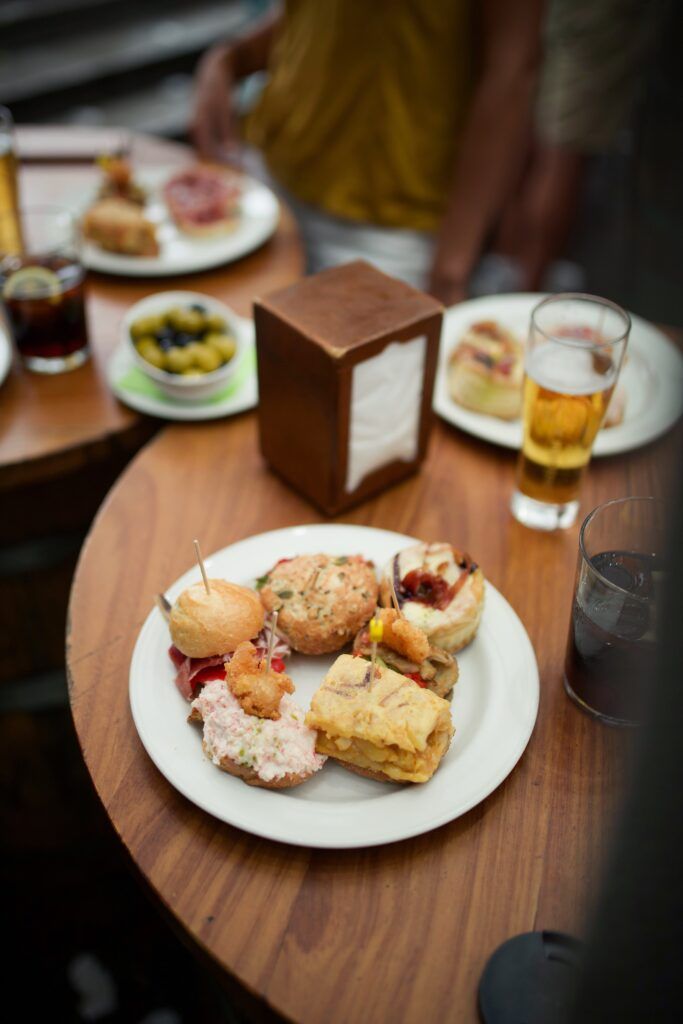
Spanish Tapas
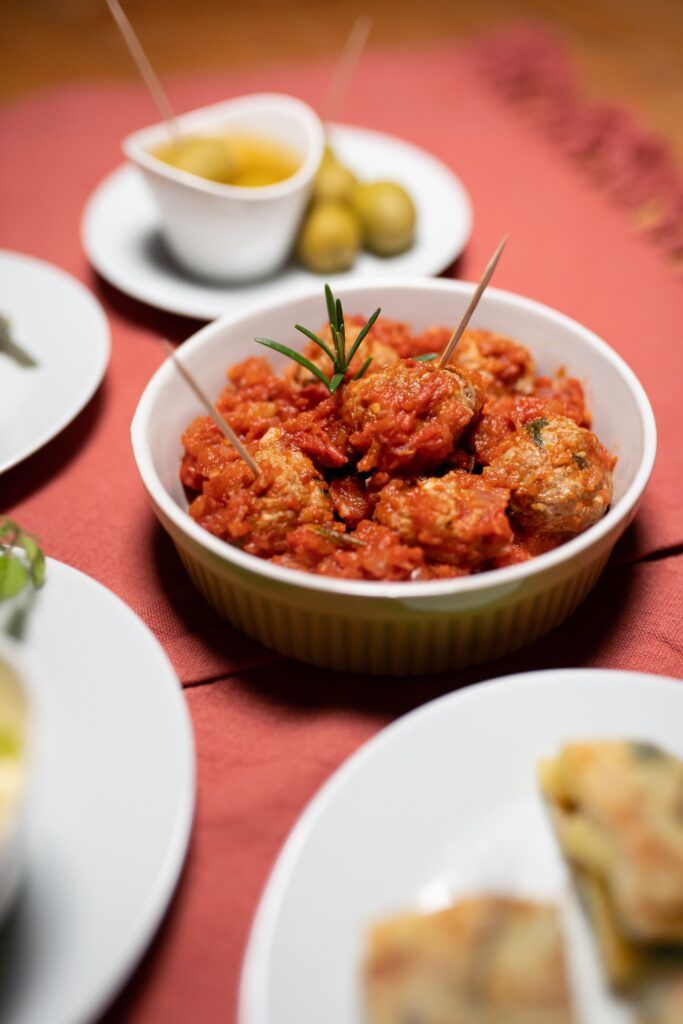
Spanish Meatball Tapas
Spanish Iberian tapas, an essential part of “tapeo”
Iberian tapas, such as jamón ibérico and Iberian cured meats , are tapas with a high gastronomic value. They are probably some of the quickest and simplest tapas to prepare, but in this case, what really stands out is the exceptional quality of the product.
Jamón ibérico is the jewel in the crown, one of the most highly prized tapas in Spain. It is an exclusive product of the Iberian Peninsula and comes from the Iberian pig – the only breed capable of infiltrating fat into its muscle.
This very distinctive characteristic, together with the patient and delicate curing process it undergoes, makes jamón ibérico a true delight for every palate. For this reason, it is considered one of the most gourmet Spanish tapas and a symbol of Spanish gastronomic culture.
The most famous Spanish tapas
At Enrique Tomás, as experts in jamón, we would like to highlight three classic Spanish tapas featuring one of Spain’s star products: jamón ibérico. A striking, exceptionally high-quality product that adds extra value to any tapa.
We recommend trying them, if you have the opportunity, at our Enrique Tomás gourmet stores , or, if you prefer, you can prepare them at home. Surprise your family or friends by organising an informal dinner based on Spanish tapas – a very simple way to make them happy while introducing them to some of the finest products from our land.
A platter of Iberian jamón and cured meats
The best way to savour the authentic taste of jamón ibérico and cured meats is to enjoy them on their own, sliced. This is an option you will find in many establishments in Spain and one that is very easy to prepare at home if you have the right products.
In our online shop, you will find all the ingredients for your platter in pre-sliced packs , ready to enjoy. Simply open the pack a little while before eating and you are ready to go.
We usually serve this Iberian platter with some Seville-style picos breadsticks . They are the perfect accompaniment, are filling and their texture makes them ideal for cleansing the palate, especially when eating jamón.
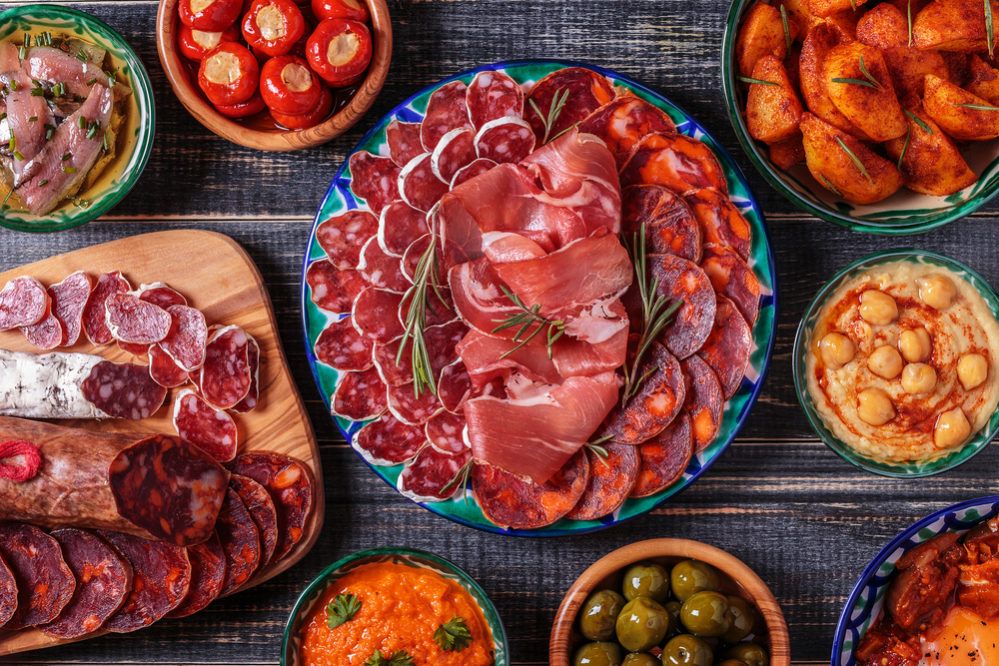
A platter of Iberian jamón and cured meats
Ingredients
- 100% Iberian acorn-fed jamón
- Acorn-fed Iberian chorizo
- Acorn-fed Iberian salchichón
- Acorn-fed Iberian lomo
- Some Seville-style picos breadsticks to accompany them.
Serve everything on a large plate or platter, which you can decorate to your liking with fruit such as grapes, a little mint for colour, or anything else you prefer.
Enrique Tomás Iberian patatas bravas
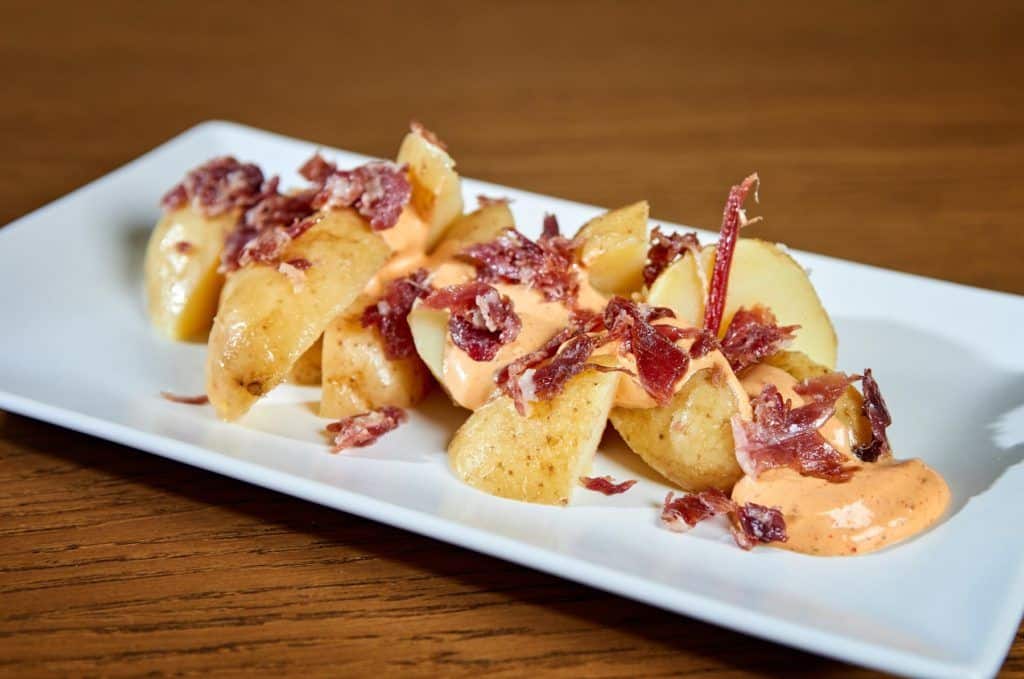
Enrique Tomás Iberian patatas bravas
Patatas bravas with jamón ibérico shavings are an Enrique Tomás creation. They are also easy to prepare and the result is outstanding.
The combination of perfectly cooked potatoes, mildly spicy brava sauce and the intense flavour of jamón ibérico shavings creates a truly original and appetising dish, not only because of its appearance but also because of its wonderful flavour.
Ingredients
- Some delicious patatas bravas, cooked until just right (baked or boiled)
- Jamón ibérico shavings
- Special mild brava sauce made with mayonnaise, tomato, extra virgin olive oil, a pinch of salt and paprika.
Spanish omelette montadito with a slice of jamón ibérico
Spanish omelette is another classic of Spanish gastronomy. A traditional dish that always delivers excellent results. It can be served in many different ways, but one of the most typical is as a “montadito”, meaning on top of a slice of bread.
In this case, we will also add a slice of jamón ibérico on top, creating three layers of different flavours that complement each other perfectly and make every bite a delight.
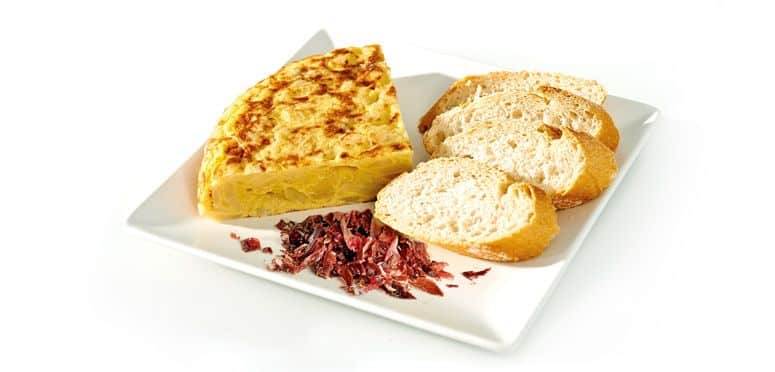
Spanish omelette and jamón pincho
Ingredients
- Spanish omelette (eggs and potatoes, with or without onion)
- A slice of artisan bread.
- A slice of acorn-fed Iberian jamón that we will bake for a couple of minutes alongside the omelette. If desired, it can be served with a little bread or some Seville-style picos breadsticks.
There are many more Spanish tapas options. All you need to do is use your culinary imagination and bring those dishes in your mind to life. Prepare them to your taste! Always include quality products and, of course, Enrique Tomás jamón.
Long live tapeo!